
The Secret to Indestructible Roads
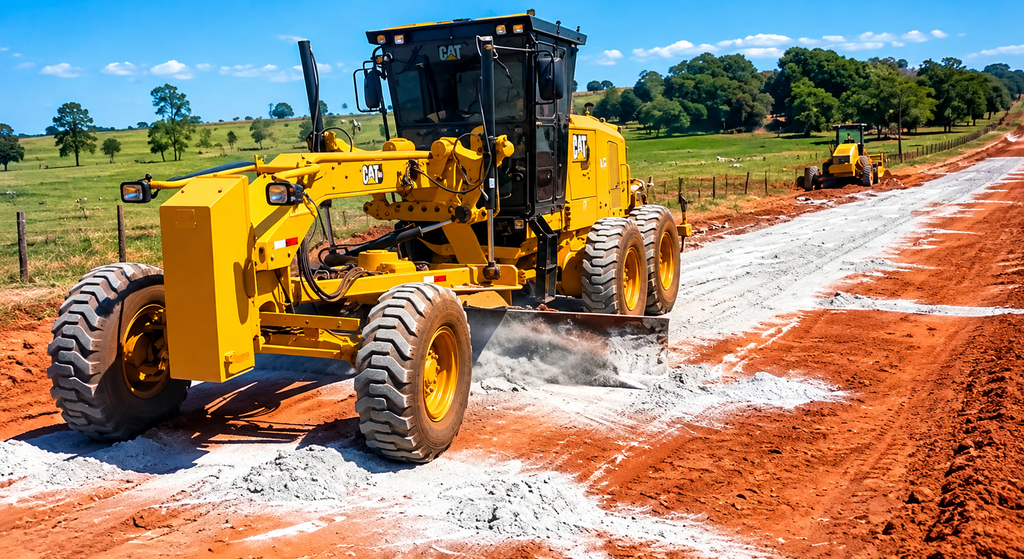
Have you ever seen a road crew dumping bags of dry cement straight onto a dirt road before adding a single drop of water or paving it?
At first glance, the process looks completely bizarre: workers tossing dozens of cement sacks directly onto the raw soil, slicing them open with machetes, and leaving a giant cloud of gray dust in their wake.
It might look like a waste of materials or a sloppy quick-fix, but this technique is actually one of the most clever, cost-effective civil engineering tricks in the world for turning soft, muddy tracks into rock-solid highways.
The “Gray Dust” Process
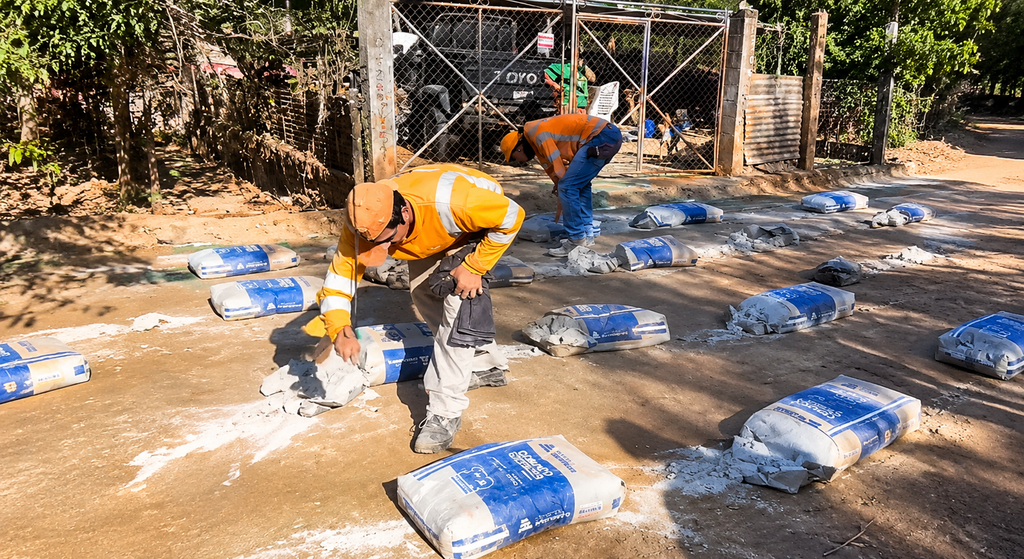
- The Drop: First, a flatbed truck drives along the route while workers drop cement bags onto the ground at carefully calculated intervals.
- The Slice: Right behind them, the crew cuts the sacks open with machetes and spreads the dry powder over the dirt.
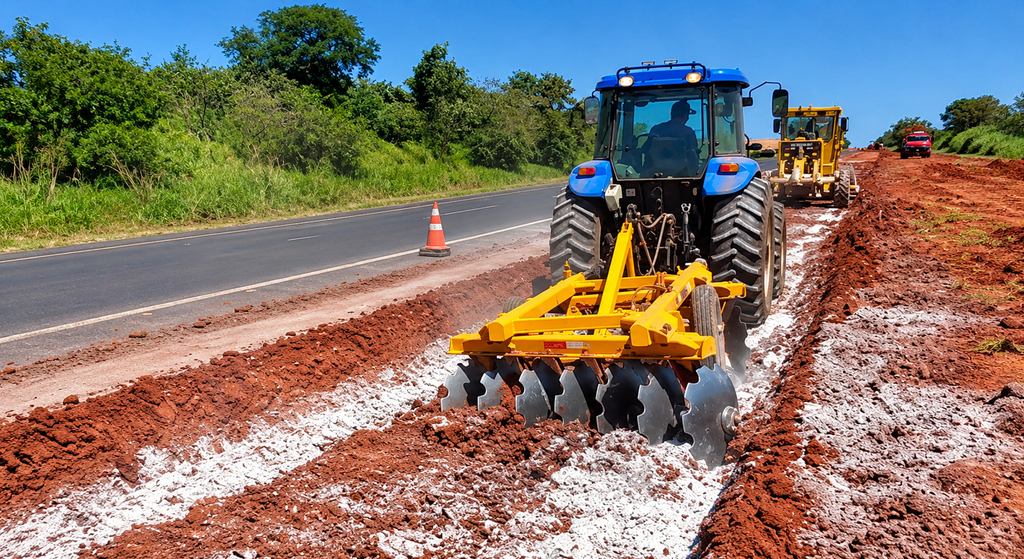
- The Blend: Next comes the heavy machinery—usually a grader or a soil stabilizer tractor. Using powerful blades and teeth, it churns the top layer of dirt together with the powder until it forms a uniform mixture.
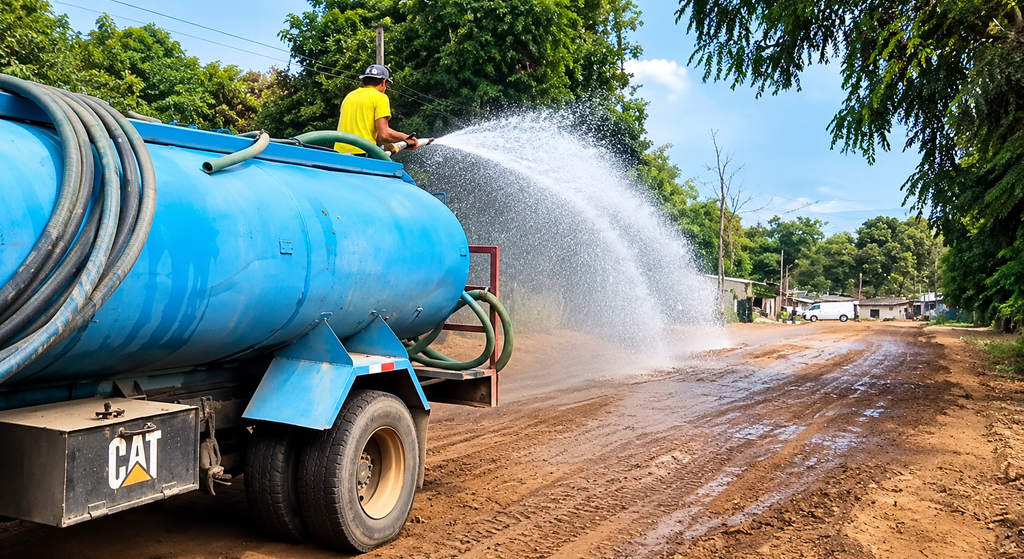
- The Activation: Only then does the water truck roll in. As it sprays down the dry blend, the chemical reaction kicks off.
- The Final Crush: While the mixture is still damp, a heavy steamroller moves in immediately, packing and crushing the ground with maximum force.
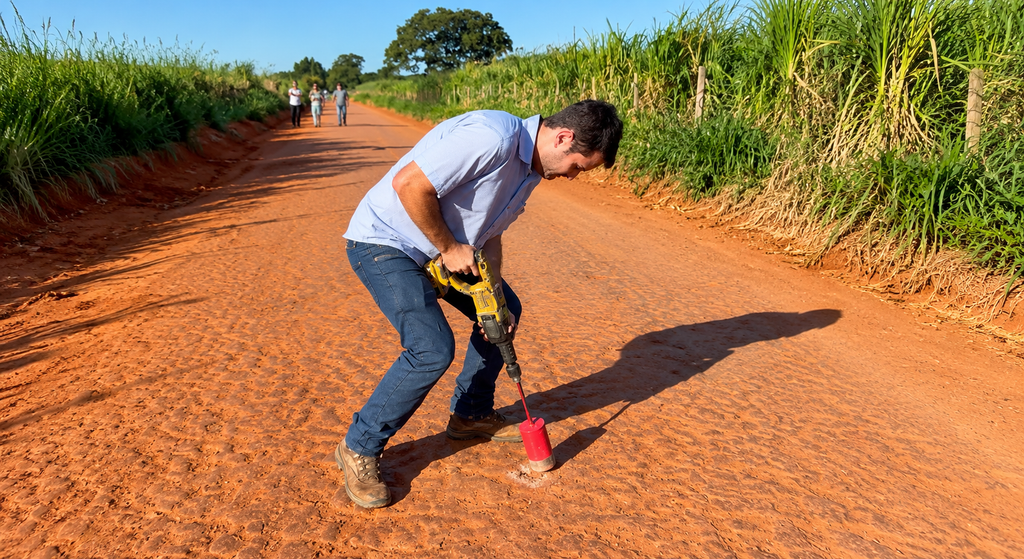
@AsfaltoEcologico
Why Not Just Use Regular Asphalt?
It all comes down to two simple factors: cost and soil stability.
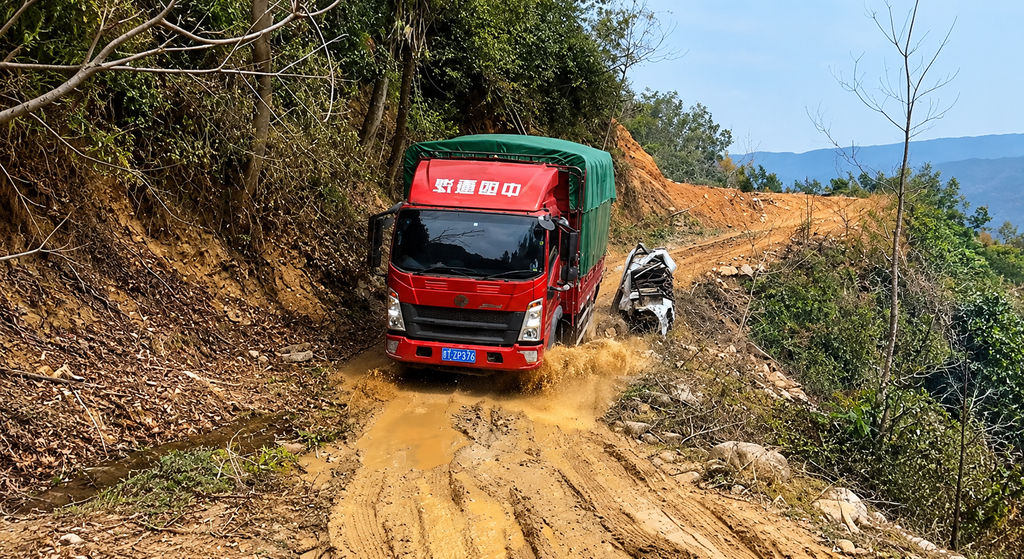
Clay-heavy or sandy soils are a nightmare for unpaved roads. When heavy rains hit, water soaks deep into the ground, turning the road into a swampy mud pit where heavy trucks immediately get stuck.
This technique—known in civil engineering as soil-cement stabilization—chemically alters the structure of the ground. Instead of laying a thin layer of asphalt over soft dirt (which would quickly crack and cave in once the mud shifts underneath), engineers turn the ground itself into the pavement.
Built to Survive Heavy Rains
The true magic of soil-cement is its waterproofing capability. Once the roller passes and the cement fully cures:
- Rainwater can no longer penetrate into the soil layer.
- The road gains extreme load-bearing strength, easily handling heavy tractor-trailers and farm equipment.
- Potholes, rutting, and mud traps are virtually eliminated.
In many rural areas, soil-cement serves as the final, long-lasting surface for hard-to-reach access roads. In major highway construction, it creates an indestructible sub-base beneath a top coat of asphalt.
So the next time you spot workers tearing open cement sacks in the middle of nowhere, you’ll know the secret: they aren’t wasting materials—they are building one of the toughest roads known to engineering!
Popular topics:
Is styrofoam cheaper than brick?
Why braid grass in winter?
Civil Engineering, Soil Cement, Dirt Roads, How It Workscement on dirt road, Civil Engineering, Dirt Roads, How It Works, Soil Cement, soil cement process, soil cement stabilization, soil stabilizer reclaimer, spreading cement on soil, why put cement on dirt roads
Leave a Reply